8.1(Q1)
CiteScore
37
h-index
Volume & Issue: Volume 8, Issue 1, January and February 2026, Pages 1-153 
Number of Articles: 5
Synthesis, Properties, and Chemical Applications of Functional Nanomaterials: Current Trends and Future Perspectives

Synthesis, Properties, and Chemical Applications of Functional Nanomaterials: Current Trends and Future Perspectives

Pages 1-25

https://doi.org/10.48309/jcr.2026.534778.1481

Gomathi Periyasamy, Ch. K. V. L. S. N. Anjana Male, Deepti Kolli, Patibandla Jahnavi, Soniya Rani, Anuradha Averineni, Vema Kiran, Prem Shankar Gupta

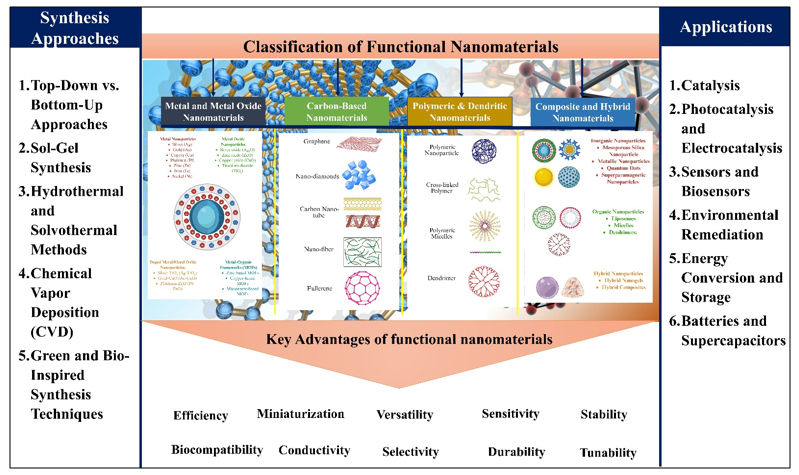
Abstract Functional nanomaterials have emerged as transformative agents in modern chemical science, offering unprecedented control over their physical, chemical, and electronic properties at the nanoscale level. This review comprehensively explores the synthesis, classification, properties, and chemical applications of functional nanomaterials. We begin with an overview of their definitions, historical developments, and critical roles in the chemical industry. Nanomaterials are classified into major types, including metals and metal oxides, carbon-based structures, polymeric and dendritic systems, and hybrid composites, each possessing unique characteristics and application potential. A detailed discussion of synthesis strategies highlights conventional and advanced methods, including sol-gel, hydrothermal, chemical vapor deposition, and eco-friendly green synthesis. The physicochemical and structural properties, such as particle size, surface area, and optical, magnetic, mechanical, and thermal attributes, are critically analysed to correlate their structure–function relationships. The review further elaborates on key application domains, including catalysis (heterogeneous, photo-, and electrocatalysis), sensors, environmental remediation, and energy-related systems, such as batteries and solar cells. Current challenges, such as scalability, environmental safety, and regulatory hurdles, are discussed alongside emerging trends, including stimuli-responsive systems and AI-assisted material design. This article concludes with valuable insights into future research directions, highlighting the need for interdisciplinary approaches and sustainable development. This review aims to serve as a valuable resource for researchers and practitioners seeking to harness the potential of functional nanomaterials in the chemical and allied sectors.
Coordination Modes of Azide in Bismuth Complexes: Structural Properties and Functional Applications

Coordination Modes of Azide in Bismuth Complexes: Structural Properties and Functional Applications

Pages 26-39

https://doi.org/10.48309/jcr.2026.536761.1485

Babak Mirtamizdoust, Amirhossein Karamad, Samaneh Gharehdaghi

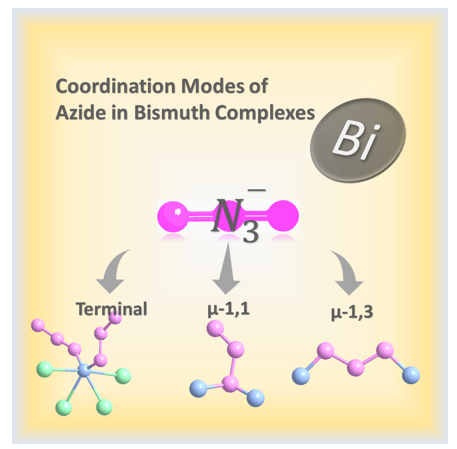
Abstract Bismuth coordination polymers have garnered increasing interest due to their diverse structural architectures and potential applications in materials science. This review elucidates the coordination chemistry of azide ligands in bismuth azide complexes, focusing on their structural diversity and functional properties. Azide ligands exhibit versatile coordination modes—terminal, bridging, and chelating—that dictate the geometric configurations, stability, and electronic properties of the resulting complexes. Through comprehensive analysis of synthetic methods, crystallographic characterization, and photophysical studies, this study explores how these coordination modes influence complex reactivity and functionality. Notably, the luminescence properties of bismuth azide complexes highlight their potential in optoelectronic devices and luminescent materials. By correlating azide coordination modes with photophysical outcomes, this review provides insights into designing novel bismuth-based materials with tailored properties for advanced technological applications.

Recent Advances in Nafion-Based Composite Membranes for Fuel Cells: Enhancing Performance and Durability

Recent Advances in Nafion-Based Composite Membranes for Fuel Cells: Enhancing Performance and Durability

Pages 40-85

https://doi.org/10.48309/jcr.2026.528481.1466

Valiollah Manadanipour, Mahdi Bemani, Zahra Prasatabar

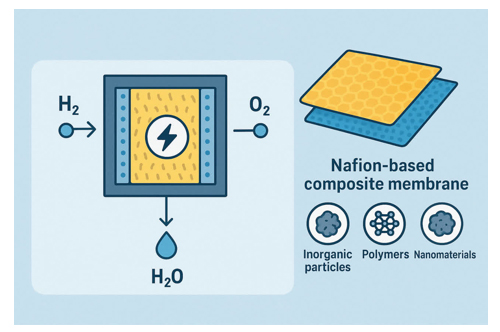
Abstract Proton exchange membrane fuel cells (PEMFCs) have emerged as a leading clean energy technology due to their high efficiency and low environmental impact. Nafion, the predominant proton exchange membrane (PEM), exhibits exceptional proton conductivity, chemical stability, and mechanical strength. However, its practical application is limited by performance degradation at elevated temperatures, excessive methanol permeability, and high production costs. To address these challenges, recent studies have explored Nafion-based composite membranes incorporating inorganic fillers, organic additives, metal-organic frameworks (MOFs), and nanostructured materials. This review systematically evaluates recent advancements in such composite membranes, focusing on innovative strategies to enhance proton conductivity, mitigate fuel crossover, and extend operational durability. Notably, the incorporation of hybrid nanomaterials and tailored architectures has yielded remarkable performance enhancements under extreme operating conditions. For future commercialization, critical research priorities include the development of cost-effective synthesis techniques, rigorous long-term stability evaluations, and scalable manufacturing processes. These efforts are essential to enable the widespread adoption of Nafion-based composite membranes in next-generation PEMFC systems.

Neurochemical Signaling Molecules in Gut–Brain Axis: Microbial Metabolites and Therapeutic Implications

Neurochemical Signaling Molecules in Gut–Brain Axis: Microbial Metabolites and Therapeutic Implications

Pages 86-117

https://doi.org/10.48309/jcr.2026.532539.1479

Patibandla Jahnavi, Ronald Darwin, Pavani Battula, Grandhi Surendra, Joel Mart, Nafisa Farheen H., Surendra Singh Gautam, Prem Shankar Gupta

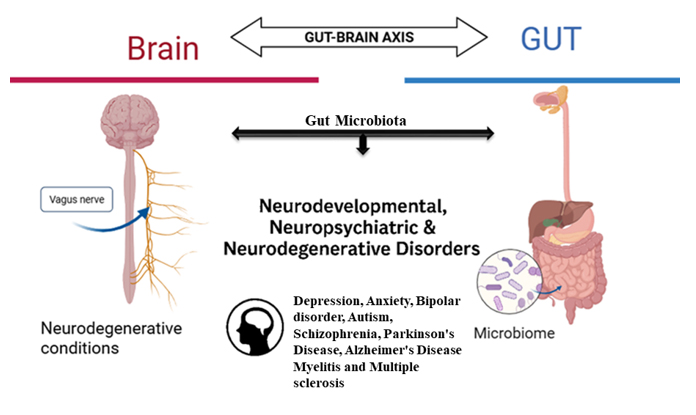
Abstract The gut–brain axis is a bidirectional communication network linking the gastrointestinal tract and central nervous system and is significantly influenced by the gut microbiota. Emerging evidence indicates that microbial dysbiosis alters neurodevelopment, neurotransmission, and behavior, contributing to psychiatric and neurodegenerative disorders, such as depression, autism, Parkinson’s disease, and Alzheimer’s disease. Key mediators of this crosstalk are microbial metabolites and neuroactive compounds including γ-aminobutyric acid (GABA), short-chain fatty acids (SCFAs), indole derivatives, and tryptophan metabolites. These bioactive molecules modulate brain function by affecting neuronal signaling, neurotransmitter balance, immune responses, and intestinal barrier integrity. This review emphasizes the chemical and functional roles of these compounds in mediating gut–brain communication. Understanding their structure–activity relationships offer novel insights into therapeutic approaches involving probiotics, prebiotics, dietary modulation, and microbial metabolite targeting. Rather than addressing all disorders, this review focuses on the molecular mechanisms underlying gut-derived neurochemical signaling and its relevance to brain health, highlighting promising strategies for managing neuropsychiatric conditions through microbiota modulation.

Advancing Renewable Energy Technologies through Transition Metal Nanocatalysts: Synthesis Techniques and Their Roles in Clean Energy Applications

Advancing Renewable Energy Technologies through Transition Metal Nanocatalysts: Synthesis Techniques and Their Roles in Clean Energy Applications

Pages 118-153

https://doi.org/10.48309/jcr.2026.521089.1450

Hari Prasadarao Pydi, Ashish Kumar, P. Satishkumar, Anil Kumar Chourhary, Prashant D. Kamble, Rakesh CHandrashekhar, S. Vijayakumar, Kirtanjot Kaur, A. Anitha Lakshmi

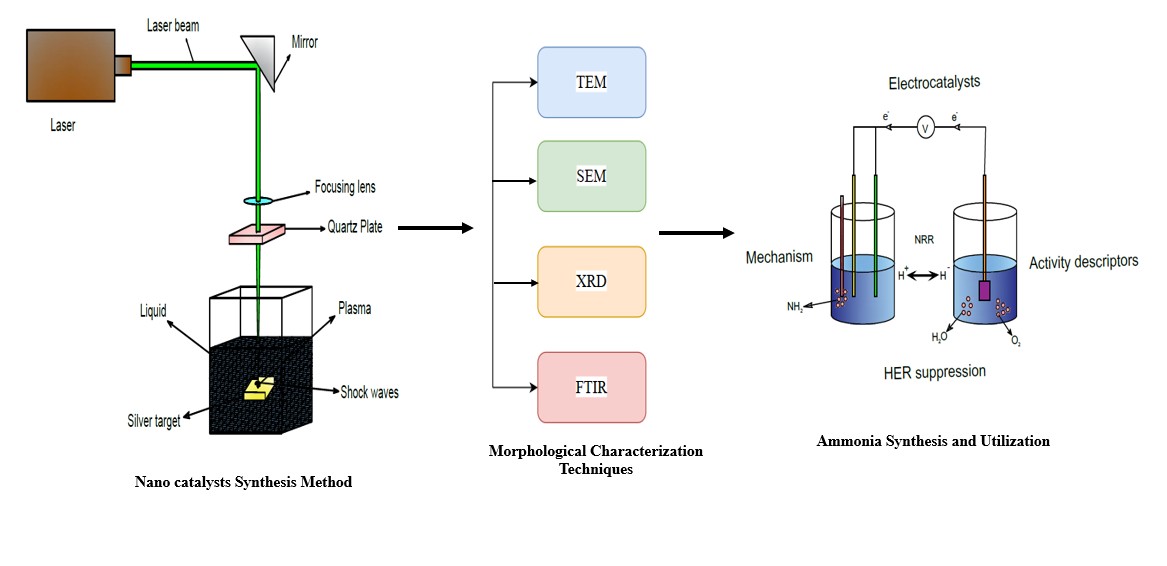
Abstract Renewable energy technologies advance through transition metal nanocatalysts due to their superior catalytic performance combined with modifiable compatibility and durable operational capabilities. The study analyses their importance in vital energy production systems that involve hydrogen generation which achieving up to 96% H₂O₂ selectivity in electrocatalytic oxygen reduction and biomass transformation alongside biofuel manufacturing, as well as CO₂ reduction with conversion efficiencies exceeding 85%, carbon sequestration, and ammonia production. The enhancement of catalytic performance can be achieved through different synthesis approaches, which include physical vapor deposition, laser ablation, thermal decomposition, microbial synthesis, and photochemical synthesis. Moreover, advanced surface engineering and functionalization techniques enhance reactivity, selectivity, and durability, with certain catalysts maintaining over 90% activity after 100 hours of operation. Computational studies and theoretical insights further refine our understanding of reaction mechanisms, electronic structures, and catalyst design principles. The integration of these advancements drives the development of sustainable and efficient energy conversion systems, positioning transition metal nanocatalysts as essential components in the transition to cleaner and more sustainable energy solutions.